

Eye exams are where many of our long-term relationships begin, and how we help families feel supported, year after year. We care for children, teens, adults, and older adults in a calm, focused setting.
Eye Exams for Families, in The Woodlands, Magnolia, & Shenandoah
What’s Included in an Eye Exam at Our Practice?
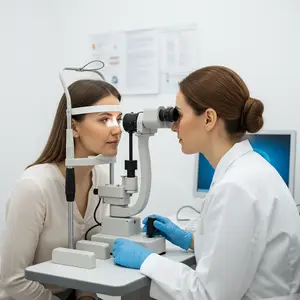
When families ask, “What does the exam cover?”, we don’t just list tests. We explain why they matter. Our goal is to make sure you feel informed. During your exam, we may:
- Review your daily habits, visual concerns, and medical history.
- Check your vision and refraction for glasses or contact lenses.
- Screen for glaucoma with gentle eye pressure testing.
- Evaluate how your eyes work together (binocular vision).
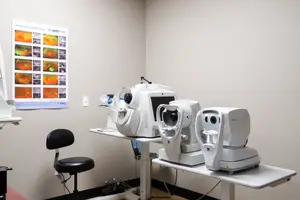
- Use OCT or Optos® imaging to examine the inside of your eyes.
- Look for early signs of cataracts, diabetic eye disease, macular degeneration, and more.
- Run visual field testing when needed for neurological or peripheral vision changes.
For children, we also assess:
- How their vision is developing.
- How well their eyes focus, track, and work together.
- Signs of lazy eye (amblyopia) or eye turn (strabismus).
The process is adjusted for each patient, so whether we’re seeing your toddler, your teen, or your parent, we meet them at their level.
When Do You or Your Child Need an Eye Exam?
This is one of the most common questions we get. Especially from parents trying to time that first visit. Here’s how we guide our patients:
First Eye Exams (Ages 3–5)
We recommend scheduling a child’s first exam before kindergarten, or sooner if something doesn’t seem quite right.
School-Aged Kids & Teens
We see many children every year for prescription changes, school performance concerns, and increased screen time symptoms like eye fatigue or dryness.
Adults (20s–60s)
We help adults stay ahead of issues like digital strain, changing prescriptions, or the early signs of chronic conditions, even if your vision feels fine.
Seniors (60+)
As you age, regular exams are essential to monitor cataracts, macular degeneration, dry eye, and other conditions that affect vision. Many of our senior patients have been with us for decades, and we’re still here for them today.

Why Families Stay With Us for Their Eye Exams
We’ve served this community since 2001. Over the years, we’ve watched children grow into adults, helped grandparents stay independent, and been a steady presence for families at every stage of life.