Skip to content

OptiLight and OptiLift: Advanced Dry Eye Treatment in Child and Family Eye Care

Dry eye can become frustrating when artificial tears and home remedies no longer provide lasting relief. Many patients are surprised to learn that inflammation and blocked oil glands are often the root cause of chronic dry eye symptoms. When this happens, treating the surface of the eye alone is not enough.

OptiLight and OptiLift are advanced, light based treatments designed to improve meibomian gland function, reduce inflammation, and restore tear stability. At Child and Family Eye Care, we use these modern technologies to treat the underlying causes of dry eye, not just the symptoms, for patients in Child and Family Eye Care.


A woman with brown hair wearing a white t-shirt is smiling and posing for a photo with her arms crossed on a blue background.
A woman standing outdoors covering her eyes with her hands

Understanding Inflammatory Dry Eye Syndrome

Dry eye disease is complex. While some patients do not produce enough tears, many experience evaporative dry eye caused by meibomian gland dysfunction. In these cases, the oil layer of the tear film becomes unstable, leading to rapid tear evaporation.

Inflammation plays a major role in this process. When inflammation develops along the eyelids and surrounding tissues, it disrupts healthy oil production and contributes to gland blockage. Over time, this cycle of inflammation and obstruction worsens dry eye symptoms.

This is where light-based therapy can make a meaningful difference.

What is OptiLight?

OptiLight is an FDA approved intense pulsed light treatment for dry eye associated with meibomian gland dysfunction. Originally developed for dermatologic use, intense pulsed light therapy has been adapted to treat inflammation that contributes to dry eye disease.

OptiLight uses carefully controlled pulses of light applied to the skin around the eyes. These pulses target abnormal blood vessels and inflammatory markers that contribute to eyelid inflammation. By reducing inflammation, the treatment helps restore healthier gland function and improve tear film stability.

The result is improved comfort and more consistent vision for patients at Child and Family Eye Care in Child and Family Eye Care.

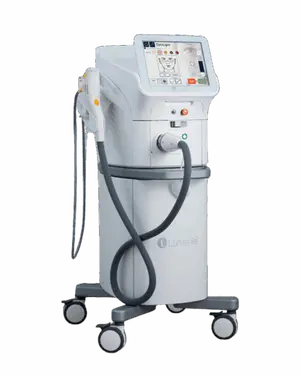
A white Lumenis medical device with a touch screen on a gray background.
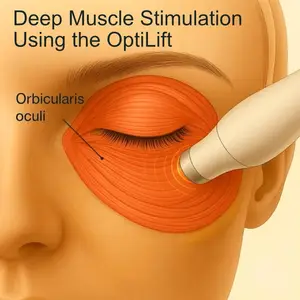
An illustration showing deep muscle stimulation using the OptiLift device targeting the orbicularis oculi muscle around the eye.

What is OptiLift?

OptiLift complements OptiLight by enhancing eyelid function and supporting the health of the tissues around the eyes. It is often combined with light-based therapy to maximize results.

OptiLift treatments may include targeted approaches that improve circulation, reduce debris along the lash line, and promote healthier eyelid structure. When combined with OptiLight, the overall goal is to support both gland performance and ocular surface health.

Together, these treatments offer a comprehensive solution for patients in Child and Family Eye Care with chronic inflammatory dry eye.

How Light-Based Therapy Improves Dry Eye

OptiLight and OptiLift address several contributing factors of dry eye disease:

  • Reduction of eyelid inflammation
  • Improved meibomian gland performance
  • Decreased abnormal blood vessel activity
  • Reduction of bacteria and debris along the lash line
  • Enhanced tear film stability

By calming inflammation and improving gland output, light based therapy helps restore a more stable tear film. A stable tear film is essential for both comfort and clear vision.

Unlike eye drops, which provide temporary moisture, light-based therapy works at a deeper level to interrupt the inflammatory cycle.

Portrait of a smiling mature woman with short hair and a turtleneck sweater, standing in a modern, bright living room.
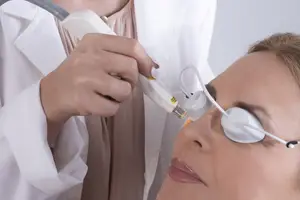
A woman getting an eye treatment with a laser by a doctor

What to Expect During Treatment

OptiLight and OptiLift treatments are performed in-office and typically take only a short amount of time at Child and Family Eye Care. Before treatment begins, a comprehensive dry eye evaluation is performed to confirm that inflammation and gland dysfunction are contributing to symptoms.

During OptiLight treatment, protective shields are placed over the eyes. Pulses of light are then delivered to the skin below the eyes and around the eyelids. Most patients describe the sensation as a brief warming feeling or mild snapping sensation.

Treatment sessions are usually completed in a series, often spaced a few weeks apart. The number of sessions depends on the severity of dry eye and individual's response to therapy.

There is minimal downtime. Most patients return to normal activities the same day.

Benefits of OptiLight and OptiLift

Patients who undergo light-based dry eye treatment often report significant improvement in symptoms and overall eye comfort.

Potential benefits include:

  • Reduced redness and inflammation
  • Improved tear quality
  • Less burning and irritation
  • More stable vision throughout the day
  • Decreased reliance on artificial tears
  • Improved tolerance for contact lenses

Because these treatments address inflammation directly, results can last longer than traditional drop-only approaches.

A smiling woman with short hair and a white turtleneck top is standing and posing for a picture.
An elderly woman is sitting at a desk with her hand on her forehead and looking to the side. She has a laptop, a cup, a notebook, and a pen on the desk in front of her. She is wearing a blue long-sleeve shirt and has gray hair. Behind her is a potted plant and a window with a brick wall.

Who is a Good Candidate for Light-Based Dry Eye Therapy

OptiLight and OptiLift are often recommended for patients with moderate to severe evaporative dry eye, especially when inflammation is present.

You may be a candidate if you:

  • Experience persistent dry eye symptoms
  • Have meibomian gland dysfunction
  • Struggle with eyelid inflammation
  • Have rosacea-associated dry eye
  • Have not achieved relief from artificial tears alone
  • Experience fluctuating vision due to tear instability

A thorough dry eye assessment at Child and Family Eye Care in Child and Family Eye Care helps determine whether light-based therapy is appropriate for your specific condition.

The Role of Inflammation in Long-Term Eye Health

Inflammation not only causes discomfort but can also affect long-term ocular surface health. When inflammation persists, meibomian glands may become damaged or less functional over time.

Addressing inflammation early helps preserve gland structure and maintain healthier tear production. This proactive approach reduces the risk of worsening symptoms and helps protect visual quality.

For many patients in Child and Family Eye Care, light-based therapy represents a shift from reactive symptom management to proactive dry eye care.

A woman is touching her left eye with her left hand. She has a slight blush on her cheeks and her eyes are slightly closed. She is looking to the left.
Portrait of a smiling woman with short hair wearing a denim shirt standing near a window

Combining OptiLight with Other Dry Eye Treatments

OptiLight and OptiLift are often part of a comprehensive dry eye treatment plan. Depending on your needs, treatment may also include:

  • LipiFlow therapy
  • Prescription anti-inflammatory eye drops
  • Lid hygiene protocols
  • Nutritional support
  • Artificial tears for supplemental comfort

Combining therapies allows for a customized approach that targets multiple contributors to dry eye disease.

At Child and Family Eye Care, treatment plans are tailored to each patient’s condition, lifestyle, and long-term goals.

How Long Do Results Last?

Results vary depending on the severity of inflammation and gland dysfunction. Many patients notice improvement after the first few treatments, with continued progress throughout the treatment series.

Maintenance treatments may be recommended periodically to sustain results. Regular follow-up visits at Child and Family Eye Care allow for monitoring and adjustment of your care plan.

Long-term relief depends on addressing both inflammation and gland health consistently.

Schedule Your Dry Eye Evaluation

Chronic dry eye does not have to disrupt your daily life. If you experience ongoing irritation, fluctuating vision, or discomfort despite regular use of artificial tears, it may be time to ask your eye doctor about advanced treatment options.

Child and Family Eye Care provides comprehensive dry eye evaluations and modern therapies, including OptiLight and OptiLift in Child and Family Eye Care. Our team is dedicated to identifying the root cause of your symptoms and delivering personalized, effective care.

Schedule a consultation today to learn how light-based dry eye treatment can help restore comfort, clarity, and confidence in your vision.