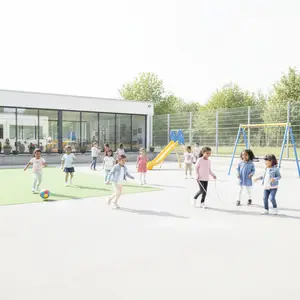
At Child and Family Eye Care, we provide thoughtful, age-appropriate eye exams for children of all ages, in an environment built around warmth, trust, and clear communication.
Pediatric Eye Care That Grows With Your Child

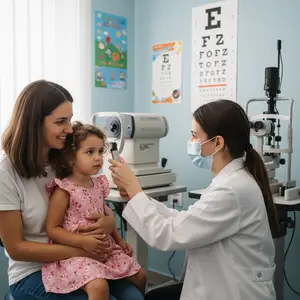
When Should My Child Have Their First Eye Exam?
We recommend a first eye exam between ages 3 and 5, or sooner if you’ve noticed any concerns. After that, children should have annual exams, even if they haven’t mentioned trouble seeing.
Many common vision problems don’t cause pain or obvious symptoms, but can still affect development, reading, or behavior.
We also encourage check-ins around major milestones:
- Before starting kindergarten
- During the early elementary years
- Before transitioning to middle or high school
- If teachers or caregivers mention focus or learning concerns
What Does a Pediatric Eye Exam Check For?
We use tools designed for comfort and adjust our language to help kids feel at ease. We check for:
- Visual acuity (how clearly they see at near and far distances).
- Prescription needs for glasses or contact lenses.
- Eye alignment and muscle coordination (e.g., eye turns).
- Signs of amblyopia (lazy eye).
- How well their eyes track, focus, and work together.
- Binocular vision (how the brain processes input from both eyes).
- Internal eye health using tools like Optos® imaging (often without dilation).
We’re not just looking at how your child sees. We’re looking at how their vision is working, and how it’s supporting their overall development.
Vision Therapy for Functional Vision Challenges
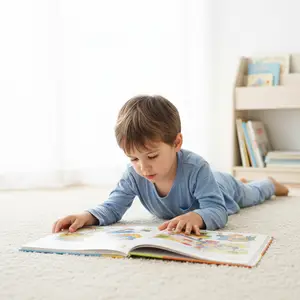
Some children struggle with how their eyes work, not just how clearly they see. If your child has trouble reading for long periods, skips lines when reading, has difficulty with attention or coordination, or has been diagnosed with a concussion or developmental delay, the issue may be with how their eyes track, focus, or work together.
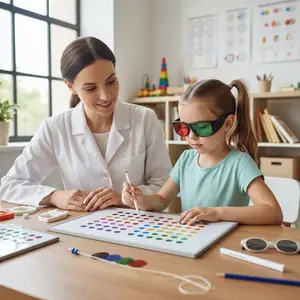
We offer comprehensive functional vision evaluations and, when appropriate, refer families to our dedicated in-house clinic, Meta Vision, for doctor-led vision therapy and neuro-optometric rehabilitation.
Vision therapy can help children improve:
- Reading fluency and tracking
- Eye teaming and focusing
- Visual attention and processing
- Post-concussion visual symptoms
- Hand-eye coordination and spatial awareness
If you’ve tried glasses and your child is still struggling, or if another provider has suggested vision therapy. We’re here to help you understand what’s going on and what options are available. We walk with families through every step of the process, so nothing feels confusing or overwhelming.
Trusted Pediatric Eye Care in The Woodlands, Magnolia, & Shenandoah
We’ve cared for generations of families across the area, and many of our patients first walked through our doors as kids.
Whether you’re bringing in your preschooler for their first eye exam or checking on your teen’s prescription before the school year, you can count on us for calm care that puts your child’s needs first.