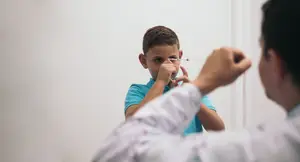
Binocular Vision Dysfunction (BVD): What to Know

Binocular vision dysfunction, often called BVD, is a condition that affects how the eyes work together as a team. When the eyes are not properly aligned or coordinated, the brain struggles to merge the two images it receives into one clear picture. This can lead to a wide range of symptoms that interfere with reading, learning, balance, and daily comfort. 

At Child and Family Eye Care, we evaluate and treat binocular vision dysfunction with thorough testing and personalized vision therapy. Our goal is to help patients of all ages feel more comfortable, confident, and visually stable in everyday life. 

A young boy wearing glasses is sitting on the floor and reading a book
Close up of a smiling young girl with brown eyes and brown hair

Understanding Binocular Vision Dysfunction

Healthy binocular vision allows both eyes to point at the same place, move together smoothly, and focus at the same time. When this system is working well, the brain effortlessly combines input from both eyes into a single, clear image.

Binocular vision dysfunction occurs when this coordination breaks down. Even small alignment or timing issues can force the brain to work overtime to compensate. Over time, this extra effort can cause discomfort and affect performance at school, work, or during daily activities. 

Unlike simple eyesight problems, binocular vision problems are functional. A person may see clearly on a vision chart and still struggle with BVD symptoms because the issue lies in eye teaming, not clarity. 

Common Symptoms of Binocular Vision Problems  Binocular vision problems can look different from person to person, which is why BVD is often misdiagnosed or overlooked. Symptoms may be constant or appear only during visually demanding tasks.  Common signs of binocular vision dysfunction include headaches, eye strain, blurred or double vision, difficulty reading, losing place while reading, sensitivity to light, dizziness, poor depth perception, and fatigue with near work. Some patients also experience trouble with balance, coordination, or motion sensitivity.  In children, binocular vision problems may show up as avoidance of reading, short attention span for visual tasks, frequent complaints of...

Binocular Vision Dysfunction vs. Lazy Eye and Other Conditions

Binocular vision dysfunction is often confused with other visual conditions, especially lazy eye and eye turn issues. 

Lazy eye, also known as amblyopia, occurs when one eye does not develop normal visual acuity, even with glasses. In contrast, patients with BVD typically have good vision in each eye individually, but the eyes struggle to work together. 

Eye turns, such as crossed or drifting eyes, are sometimes visible in binocular vision problems, but not always. Many patients with BVD have subtle alignment issues that are not noticeable without specialized testing. 

BVD can also be mistaken for attention disorders, migraines, or inner ear balance problems because symptoms overlap. A functional vision evaluation is essential for identifying whether binocular vision dysfunction is the root cause. 

A young girl wearing glasses sits on a couch and reads a book while smiling.
A boy sitting on a bed watching a TV

What Causes Eye Teaming Problems?

Eye-teaming problems can develop for many reasons. Some people are born with visual systems that struggle with coordination, while others develop binocular vision problems after concussions, head injuries, illness, or long periods of intense near work. 

Digital screen use, extended reading, and visually demanding environments can worsen symptoms when the visual system is already under stress. Without treatment, the brain continues to compensate, often increasing discomfort over time. 

How Vision Therapy Treats Binocular Vision Dysfunction

Vision therapy for binocular dysfunction is designed to improve how the eyes align, move, and work together. At Child and Family Eye Care, treatment begins with a detailed functional vision evaluation to assess eye teaming, tracking, focusing, and visual processing skills. 

Based on these findings, your optometrist creates a customized vision therapy program. Therapy typically includes in-office sessions led by trained professionals, combined with structured home activities to reinforce progress. 

Vision therapy does not rely on medication or surgery. Instead, it uses guided exercises to retrain the visual system and strengthen the connection between the eyes and brain. Over time, the eyes learn to work together more efficiently, reducing symptoms and improving comfort. 

A doctor is examining a young boy's eye using a medical tool.
A young boy wearing glasses is smiling while holding a pen and doing an activity in the classroom

Benefits of Vision Therapy for Binocular Vision Problems

Patients who complete vision therapy for binocular vision problems often experience fewer headaches, improved reading comfort, better visual stamina, and increased confidence with school or work tasks. Many also notice improved balance, depth perception, and overall visual stability. 

For children, these improvements can support learning, attention, and classroom performance. For adults, vision therapy can make daily tasks like reading, driving, and screen use feel less exhausting. 

Vision therapy addresses the underlying cause of eye-teaming problems rather than simply managing symptoms. 

Who Can Benefit from BVD Treatment?

Vision therapy for binocular vision dysfunction can help children, teens, and adults who experience symptoms related to eye-teaming problems. Patients who have not found answers through routine eye exams or who have persistent visual discomfort despite glasses may benefit from a binocular vision evaluation. 

Early diagnosis can prevent years of frustration and unnecessary strain on the visual system. 

A girl holding books with a thumb up and a few other kids sitting behind her in a classroom.

Schedule Your Binocular Vision Evaluation

If you or your child experiences symptoms that may be related to binocular vision dysfunction, a comprehensive evaluation is the next step. Child and Family Eye Care offers vision therapy services across three Texas locations, providing access to specialized care for families throughout the area. 

Schedule a consultation with your eye doctor today to learn whether vision therapy for binocular dysfunction can help improve comfort, coordination, and quality of life.