Lazy Eye (Amblyopia): Symptoms & Treatment

Lazy eye, clinically known as amblyopia, is a vision condition that develops when one eye does not learn to see as clearly as the other. Although the eye itself may appear healthy, the brain begins to favor the stronger eye and relies less on the weaker one. Over time, this reduced use can lead to lasting vision problems if left untreated. 

At Child and Family Eye Care, we provide comprehensive lazy eye treatment options, including amblyopia vision therapy programs designed to improve visual development, eye coordination, and long-term visual function for both children and adults. 

A young boy with short hair, wearing a blue polo shirt with white stripes, covering his face with his left hand, possibly feeling embarrassed.
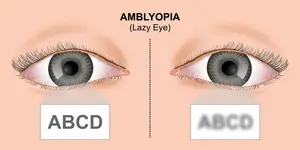
An illustration showing the comparison between normal vision and amblyopia in the eyes with labels ABCDE

What Is Lazy Eye (Amblyopia)?

Amblyopia occurs when the brain and one eye do not communicate effectively during early visual development. Because the brain receives clearer information from one eye, it begins to suppress input from the weaker eye. This suppression prevents normal visual development and can reduce depth perception and eye coordination. 

Lazy eye typically develops in childhood, often before age 7, but it does not always cause obvious symptoms. Many children are unaware that one eye sees differently from the other because the stronger eye compensates.

Common Symptoms of Lazy Eye 

Symptoms of lazy eye can vary depending on age and severity. In young children, signs may be subtle and easy to miss without a comprehensive eye evaluation. 

Common symptoms of amblyopia include reduced vision in one eye, poor depth perception, difficulty with hand-eye coordination, squinting or closing one eye, frequent eye rubbing, and trouble with reading or near work. Some children may tilt their head or avoid visually demanding activities. 

Adults with untreated lazy eye may experience eye fatigue, difficulty judging distances, or frustration with tasks that require precise visual coordination. 

Causes of Amblyopia

Lazy eye can develop for several reasons. One common cause is unequal prescription between the eyes, where one eye sees clearly, and the other does not. Eye alignment problems, such as crossed or drifting eyes, can also lead to amblyopia when the brain suppresses input from one eye to avoid double vision. 

Other causes include visual obstruction during early development, such as drooping eyelids or childhood eye conditions that limit clear visual input. Regardless of the cause, early detection is key to effective treatment. 

A young boy with glasses is covering his eye with his hand.
A smiling girl is sitting on a chair at a table, coloring a paper with a pencil and crayons in a classroom.

Lazy Eye vs Other Vision Conditions

Lazy eye is often confused with other visual conditions, but it is important to understand how amblyopia differs. 

Unlike refractive errors that can be corrected with glasses, amblyopia involves how the brain processes visual input. Glasses alone may improve clarity, but they do not retrain the brain to use the weaker eye effectively. 

Lazy eye also differs from binocular vision dysfunction. In amblyopia, one eye has reduced visual development. In binocular vision problems, both eyes may see well individually but struggle to work together as a team. In some cases, patients may experience both conditions, which is why a functional vision evaluation is essential. 

Lazy Eye Treatment Options

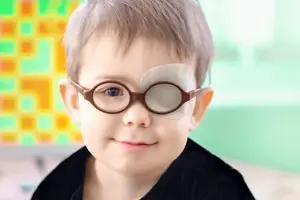
Traditional lazy eye treatment has often involved patching the stronger eye to force the brain to use the weaker eye. While patching can be effective for some children, it does not always address underlying visual skill deficits and may be challenging for families to maintain consistently. 

Modern amblyopia treatment focuses on improving visual function through structured vision therapy programs. Vision therapy works to strengthen the connection between the eyes and brain, improve eye coordination, and encourage balanced visual input.

A young boy with an eye patch wearing brown-framed glasses, smiling in a classroom
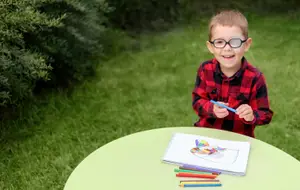
A little boy is smiling while sitting on a table and holding a blue pen in his hand. He is wearing a red and black checkered shirt and glasses. There is a green table with a notebook, a pen, and a pencil on it. There are also some colored pencils on the table. Behind him is a green lawn with some plants and bushes.

Amblyopia Vision Therapy Options

Amblyopia vision therapy options at Child and Family Eye Care are personalized based on each patient’s visual needs. Therapy typically includes in-office sessions guided by trained professionals, along with structured activities to reinforce progress at home. 

Vision therapy may also include teletherapy or remote vision therapy alternatives for families who need flexible treatment options. These programs allow patients to complete guided activities at home while maintaining professional oversight and progress monitoring. 

Vision therapy does not rely on medication or surgery. Instead, it uses targeted visual and eye exercises to promote active use of the weaker eye and support long-term visual development. 

Can Lazy Eye Be Treated in Adults?

A common misconception is that lazy eye cannot be treated after childhood. While early treatment is ideal, research and clinical experience show that adults can still benefit from amblyopia vision therapy. 

Adults may not achieve the same level of improvement as young children, but many experience meaningful gains in visual comfort, coordination, and depth perception. Treatment can also reduce eye strain and improve overall visual function for daily tasks. 

When to Seek an Evaluation 

Early diagnosis offers the best opportunity for successful lazy eye treatment. Children should receive regular eye examinations, especially if there is a family history of amblyopia or eye alignment issues. 

Adults who were diagnosed with lazy eye as children or who suspect untreated amblyopia may still benefit from a functional vision evaluation to explore available treatment options. 

A woman wearing a white turtleneck shirt holds a pair of glasses in her hands, possibly adjusting them while looking at something.

Schedule a Lazy Eye Evaluation

If you suspect lazy eye or have been told you or your child has amblyopia, a comprehensive vision evaluation is the first step. Child and Family Eye Care offers specialized lazy eye treatment and amblyopia vision therapy options across three Texas locations. 

Schedule a consultation today to learn how personalized vision therapy or teletherapy alternatives can help support healthier visual development and long-term vision outcomes.