

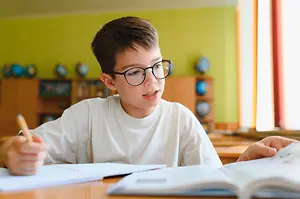
New school supplies, updated schedules, and first-day outfits often receive plenty of attention before classes begin. Your child’s vision deserves a place on that preparation list as well.
Children rely on their eyes to read, write, use digital devices, follow classroom displays, and participate in sports. A back to school eye exam can identify concerns that make those activities more difficult, even when a child has not complained about their eyesight.
Why Does Vision Matter in the Classroom?
Clear eyesight is only one part of classroom vision. Students must also move their eyes accurately across a page, maintain focus during close work, coordinate both eyes, and shift their attention between a book and the front of the classroom.
Visual skills used during the school day include:
- Distance vision for classroom displays
- Near vision for reading and writing
- Intermediate vision for computers and tablets
- Eye tracking for following words across a page
- Eye teaming for coordinating both eyes
When one or more of these skills are not working comfortably, schoolwork may require more effort. A pediatric eye exam can evaluate how a child sees and how effectively their visual system supports everyday activities.
Is a School Vision Screening Enough?
No. A school vision screening can identify certain children who may need further evaluation, but it does not replace a comprehensive eye exam.
Many screenings concentrate on distance visual acuity, which is the ability to read letters on an eye chart from across the room. A child may pass this test and still experience problems with near vision, focusing, tracking, eye coordination, or eye health.
Passing a school screening does not always mean that every part of a child’s visual system is working comfortably and efficiently.
A comprehensive vision exam for school provides a more detailed evaluation. It can help the optometrist identify nearsightedness, farsightedness, astigmatism, amblyopia, strabismus, binocular vision concerns, and other issues that may not be obvious during a basic screening.
What Happens During a Pediatric Eye Exam?
A pediatric exam is adapted to the child’s age, development, and comfort level. Children do not need to know every letter or provide adult-style responses for the kids eye doctor to gather useful information.
Depending on the child’s needs, the exam may evaluate:
- Visual acuity at near and far distances
- Prescription needs for glasses or contact lenses
- Eye alignment and coordination
- Focusing and tracking ability
- Color and peripheral vision
- Signs of amblyopia or an eye turn
At Child and Family Eye Care, pediatric exams may also include Optos® imaging to provide a detailed view of the retina, often without dilation. Additional testing may be recommended when a child’s symptoms suggest a functional vision or eye health concern.
What Signs May Suggest a Child Has a Vision Problem?
Children often assume that everyone sees the world as they do, so they may not recognize that their vision is blurry or uncomfortable. Parents and teachers are sometimes the first to notice changes in behavior.
Possible signs include:
- Squinting or closing one eye
- Holding books or devices close to the face
- Sitting near the television or classroom display
- Rubbing the eyes or blinking frequently
- Losing their place while reading
- Avoiding reading or homework
These signs do not automatically indicate an eye condition. However, they provide a good reason to schedule an examination rather than waiting for the child to report blurry vision.
When Should Children Receive Eye Exams?
Child and Family Eye Care recommends scheduling a child’s first comprehensive eye exam between ages 3 and 5, or sooner when parents notice a concern. Another exam before kindergarten can establish a helpful baseline as classroom visual demands increase.
School-age children should generally receive an annual exam unless their optometrist recommends a different schedule. More frequent visits may be appropriate for children who wear glasses or contact lenses, have progressive myopia, receive vision therapy, or have other eye health or developmental concerns.
How Can Parents Support Healthy Vision During School?
A professional examination provides the foundation for pediatric eye care, while healthy routines can help children use their eyes more comfortably throughout the year.
Parents can encourage children to:
- Take regular breaks from homework and screens
- Keep books and devices at a comfortable distance
- Use suitable lighting while reading
- Blink regularly during device use
- Spend age-appropriate time outdoors
- Wear protective eyewear for sports
These habits cannot correct a prescription or treat an eye condition, but they can complement professional family eye care and reduce unnecessary visual strain.
What If the Exam Identifies a Vision Concern?
The next step depends on the diagnosis. Some children simply need glasses or an updated prescription, while others may benefit from contact lenses, myopia management, additional functional vision testing, or another personalized treatment plan.
The optometrist will explain the findings in clear language and discuss which recommendations are appropriate. Not every school difficulty is caused by vision, but addressing an identified visual concern can remove one possible obstacle to comfortable learning.
Schedule a Back-to-School Eye Exam in The Woodlands
A child does not need to report blurry vision before an exam becomes worthwhile. Scheduling before the school year begins gives families time to address prescription changes, order eyewear, and complete any recommended follow-up care.
Child and Family Eye Care provides pediatric and family eye care in a welcoming environment designed for patients of all ages. With convenient locations and comprehensive services, the team can help your child begin the school year with greater visual comfort and confidence.
Frequently Asked Questions
Does my child need an eye exam if they passed a school screening?
- Yes. A screening provides limited information and may not evaluate near vision, focusing, tracking, eye teaming, or overall eye health. A comprehensive exam offers a more complete assessment.
Can a child have 20/20 eyesight and still have a vision problem?
- Yes. The term 20/20 describes distance clarity, but it does not show how well the eyes focus, track, or work together during reading and other close-up activities.
How long does a pediatric eye exam take?
- Exam length varies according to the child’s age, symptoms, and testing needs. The practice can provide scheduling details when the appointment is booked.
Should my child bring their current glasses to the appointment?
- Yes. Bring any current glasses or contact lenses, along with information about previous prescriptions, medications, health history, and concerns reported by teachers.
What if my child is nervous about the eye exam?
- Let the team know before or during the visit. Pediatric exams use age-appropriate instructions and can be adjusted to help children feel more comfortable and involved.